
Concentric, measured, deliberate.
Three zones. One system. Built for the Rocky Mountain wildland-urban interface.
Whether you’re on a flat Wyoming plain, a Colorado foothill, or a Montana valley — this zone framework adapts to your property and your climate.
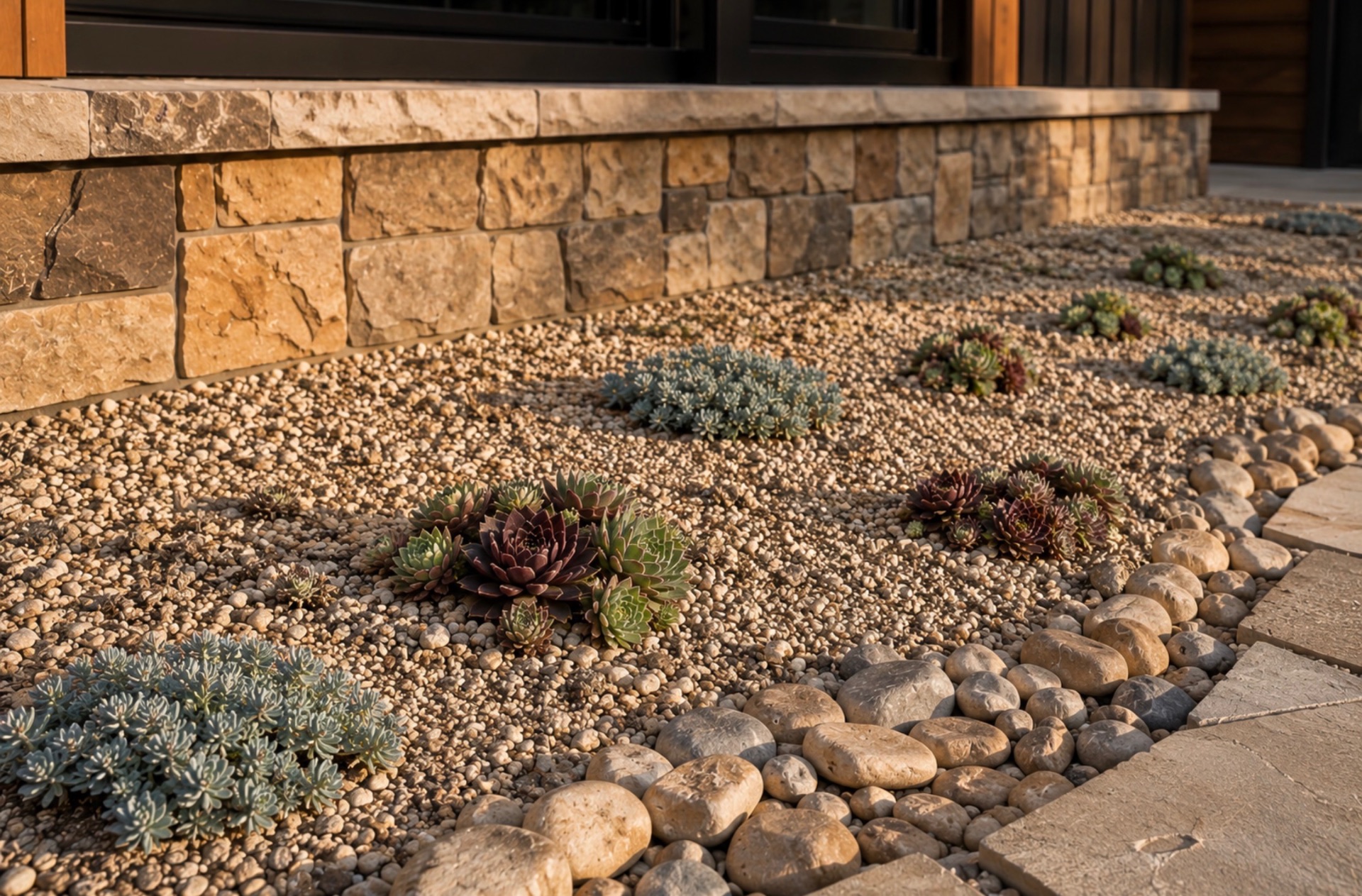
The Ember-Resistant Zone
The most critical five feet on your property. No combustible plants, no mulch, no woodpiles — but absolutely not a barren strip. Use mineral aggregate, dry-laid stone, low succulents in containers, and architectural agaves. Treat it like the garden's threshold: deliberate, jewel-like, almost minimalist. In the Mountain West, this zone also protects against wind-driven embers — which travel differently at altitude and in high-wind corridors common to Wyoming and Colorado.
- Stone, decomposed granite, or concrete pavers
- Containers of agave, sedum, or sempervivum only
- Clean gutters; cover vents with 1/8″ ember mesh
- Nothing that drops leaves or sheds bark
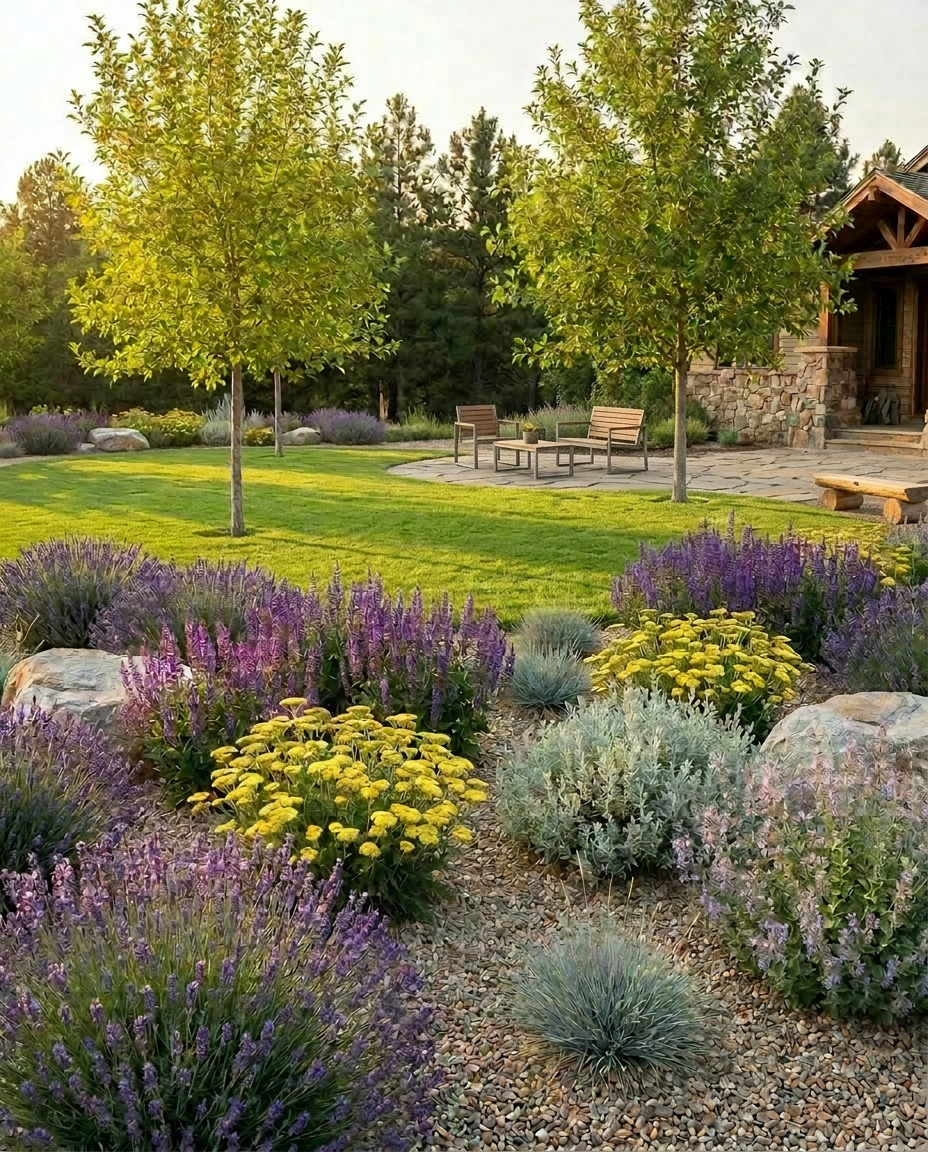
The Lean, Lush Zone
Where most of the visible 'garden' lives. Drifts of low-water perennials separated by gravel paths and stone. Plants are well-irrigated, well-spaced, and chosen for low fuel volume. Think mountain modern meets high-desert naturalism — lavender, native sage, yarrow, and serviceberry in spaced drifts with decomposed granite between them. Stunning in every season and almost zero water after year one.
- Lavender, salvia, yarrow, santolina in drifts
- Plant clusters separated by 4–6 ft of mineral mulch
- Drip irrigation on every bed
- Trees limbed up 6 ft; crowns 10 ft apart
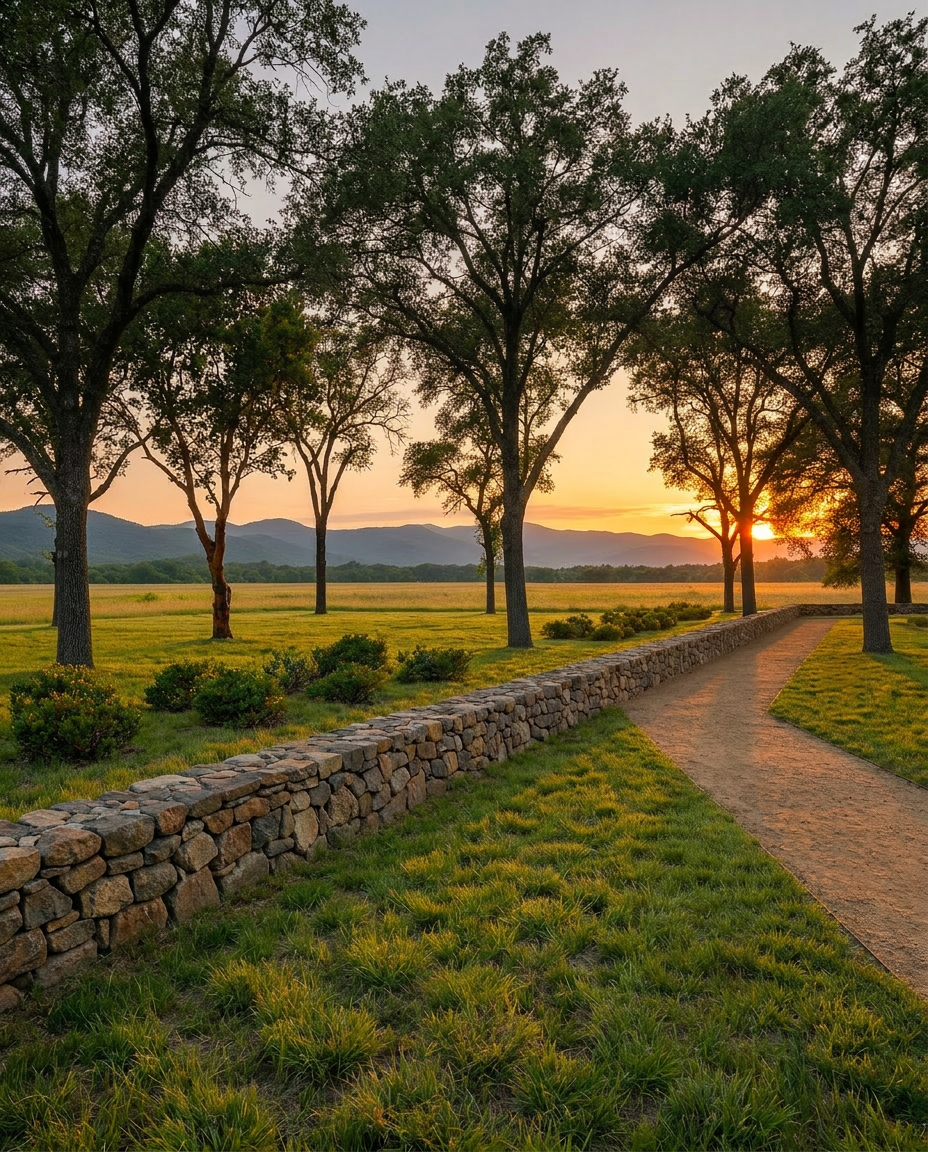
The Reduced-Fuel Zone
Where the garden meets the wild. The goal isn't a clear-cut — it's a thinned, edited, intentional transition. Quaking aspen groves, limbed-up ponderosa pines, native bunchgrasses kept low, and rough stone walls as fuel breaks. It should look like the best version of the wild land you already live in.
- Tree crowns spaced 10–20 ft apart
- Remove all dead wood and ladder fuels
- Native grasses mowed to 4″ in dry season
- Stone walls or DG paths as fuel breaks
On slopes: extend Zone 1 to 50 feet on the downhill side for grades over 20%, and to 100 feet for grades over 40%. In the Mountain West, hillside properties are common and the rules change significantly — ask about slope-specific consulting.