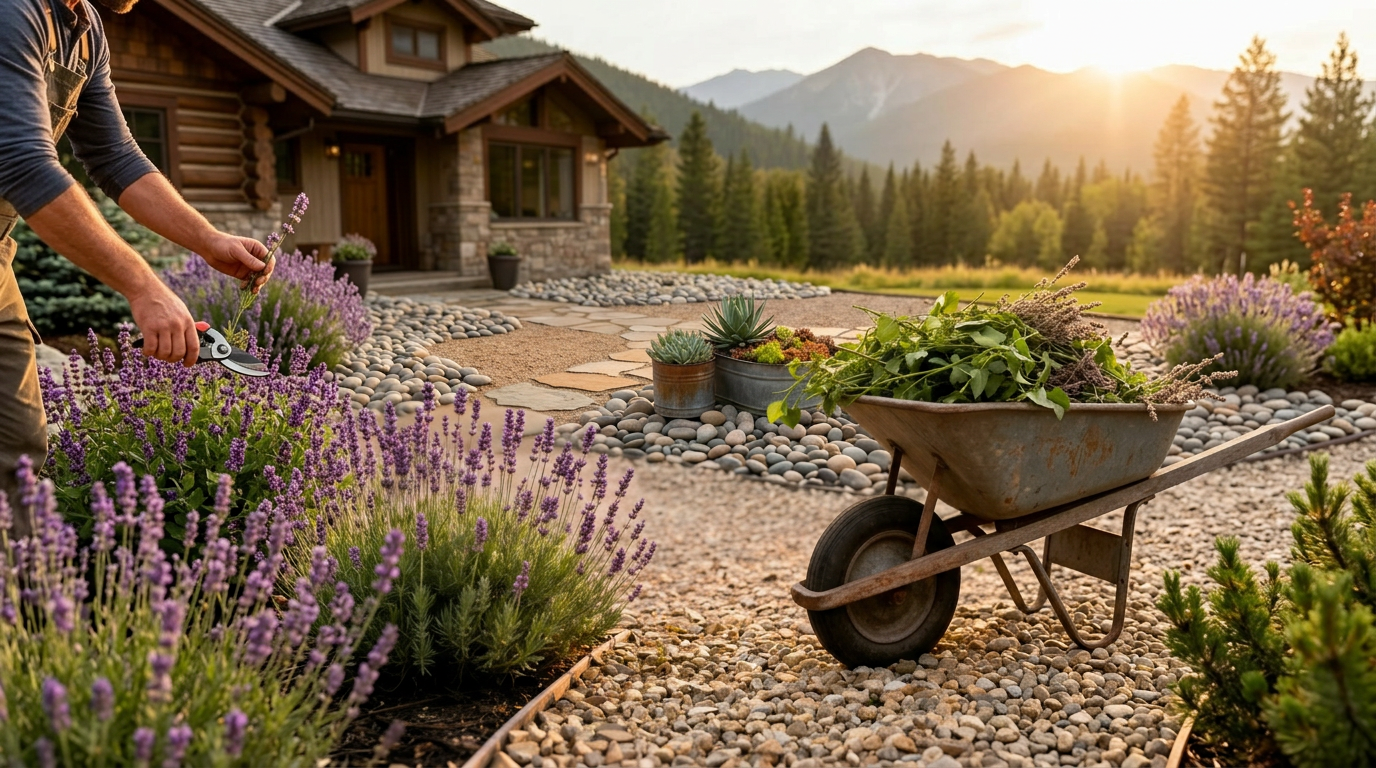
The structural season. Prune deciduous trees and shrubs while you can see the architecture. Limb-up oaks. Renew gravel beds. In Wyoming and Colorado, this is also planning season — order materials now before spring rush hits local quarries. Gravel and decomposed granite delivery books up fast in March.
- Limb up trees to 6 ft clear trunk
- Renew DG and gravel mulch in Zone 0
- Inspect roof, gutters, vents
- Plan plant additions for spring
Plant. Establish irrigation early so new plants are deep-rooted before drought. Light pruning to shape.
- In the Rocky Mountain West, soil doesn’t fully thaw until late April. Target planting window is late April through late May — before summer heat hits but after hard frost risk passes. Check your local last frost date: Cheyenne averages May 11, Denver May 7, Bozeman May 22.
- Pressure-test drip lines
- Mulch all beds (mineral, never bark within 5 ft)
- Shear lavender and santolina lightly
Vigilance. Deadhead, hydrate, and edit anything that looks tired. This is the season your garden earns its name. In Wyoming and Colorado, fire season peaks July through September. This is when your Zone 0 maintenance matters most — a weekly walk of your 5-foot perimeter takes 10 minutes and catches problems before they compound.
- Deadhead salvias, yarrow, lavender
- Remove all dead material weekly in Zone 0–1
- Mow native grasses in Zone 2 to 4″
- Confirm 100 ft defensible space is clean
Cleanup, then rest. The single most important season for ember resilience. Fall is the most critical maintenance season in the Mountain West. Leaves in gutters + November wind = serious ember risk. Complete your full cleanup before the first hard freeze — typically October in most Rocky Mountain communities.
- Deep clean gutters and roof valleys
- Cut perennials back; haul away cuttings
- Move firewood 30+ ft from any structure
- Photograph the garden for next year's plan