
Ten principles for a yard that earns its keep.
Built for the Rocky Mountain West. Where winters are brutal, summers are dry, and your yard should work harder than you do.
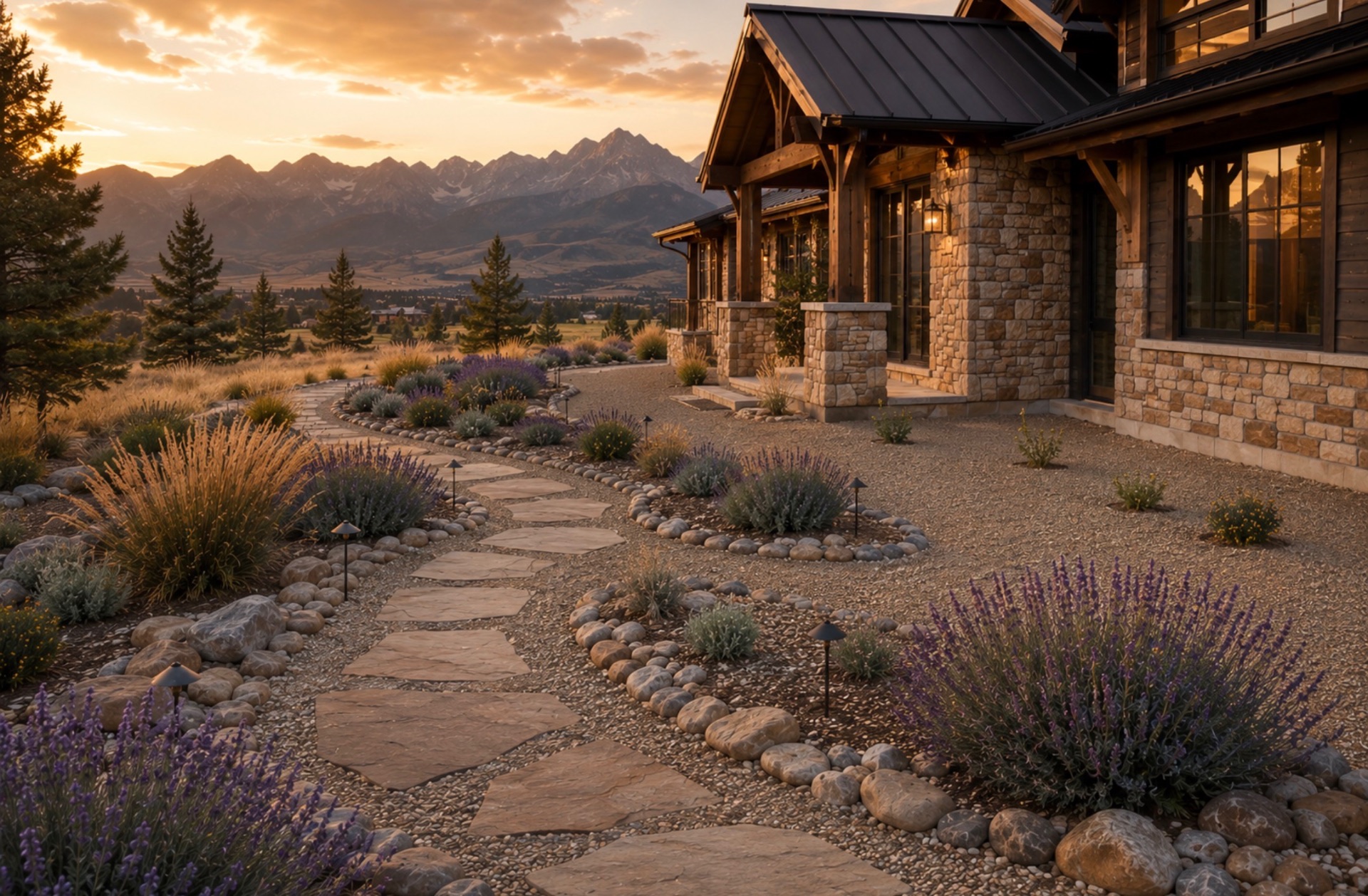
Every principle here was developed for high-altitude, dry-climate properties in Wyoming, Colorado, Montana, and Idaho — where plants need to survive -30°F winters AND summer drought AND wildfire season. Generic landscaping advice doesn't cut it here. This does.
- 01
Composition before compliance
Design the garden you want first. Then engineer it to resist fire. Beauty drives implementation.
- 02
Three zones, measured
0–5 ft, 5–30 ft, 30–100 ft. Each with its own rules — and its own visual character.
- 03
Hydrated plants over no plants
A well-irrigated, low-resin plant is a fire break AND uses a fraction of the water a traditional lawn demands. Water-smart and fire-smart are the same decision.
- 04
Layered, not lined up
Drifts and clusters with breaks of mineral mulch read as a designed garden — not a checklist.
- 05
Hardscape as a design element
Stone, decomposed granite, board-formed concrete. Functional firebreaks that look like luxury.
- 06
Edit ruthlessly, seasonally
Dead material is the enemy. Two prunings a year, one deep cleanup. That's it. In the Mountain West, this means one deep cleanup in late spring after last frost, and one again in fall before snow. That's genuinely it.
- 07
Specimen trees, well spaced
Crown separation of 10 ft minimum. Limbed up to 6 ft. Sculptural, never shaggy.
- 08
Embers travel; details matter
Gutters, vents, deck undersides. The 5 ft around your house carries more risk than the back fence.
- 09
Native where it works
Many natives are highly flammable. Choose by moisture content and habit, not provenance.
- 10
Document everything
A site plan with zones, plants, and maintenance dates. Insurers love it. Future-you will too.