
Built by a firefighter.
For homeowners.
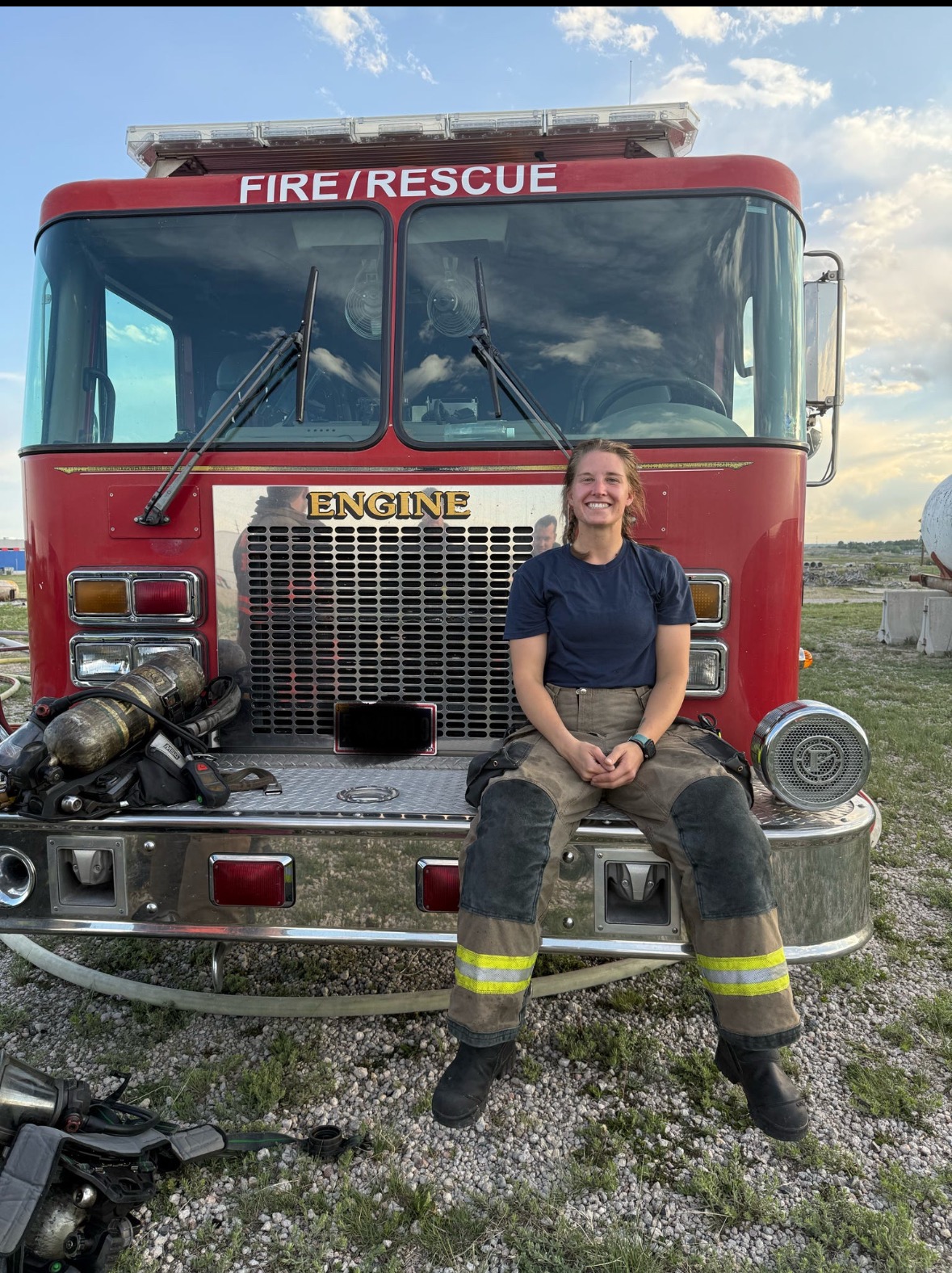
Hey, I'm Kelsey Nordsiden. Over the past five years, I've served on the front lines of emergency response — starting out on volunteer crews and wildland fire lines, spending two years as an assistant emergency manager, and currently serving as a full-time structure firefighter in Wyoming.
I've seen firsthand what fire does to homes, neighborhoods, and entire communities. And through both the fire service and emergency management, I've learned what actually gives a property a fighting chance when disaster strikes. My goal is simple: to help you create the yard of your dreams — one that dramatically reduces your risk, saves water, and stays stunning through every dry season without taking over your weekends.
A Fighting Chance
When firefighters respond to a wildland fire, a resilient yard gives them a real fighting chance. You buy them crucial time to defend your home, and you buy your neighbors time to protect theirs as well. That buffer of smart landscaping can be the difference between a home that survives and one that doesn't.
"By having a more resilient home, we can better protect our neighborhoods and communities."
Why 2026. Why now.
I watched the California fires wipe out entire neighborhoods, and closer to home, the Marshall Fire in Colorado tore through suburban communities in the dead of winter. It proved what firefighters in the West already know: fire season isn't just summer anymore, and it doesn't stop at the tree line.
At the same time, we're living through historic drought across the West. Reservoirs are dropping, watering restrictions are tightening, and homeowners are spending thousands of dollars working on a lawn that starts to die when water restrictions are implemented.
The average homeowner spends over 70 hours every summer mowing, edging, and weeding. That's hours of your life and thousands of gallons of water poured into a yard that actually increases your home's vulnerability to flying embers. It doesn't make sense anymore.
Why I Created Ember Range
A lot of traditional wildfire advice is pretty drastic — telling homeowners to clear-cut their trees, pull out their gardens, or surround their home with bare gravel.
From a firefighter's perspective, that misses what's actually happening on the ground. When homes are lost to wildfire, it's rarely a towering wall of flames — it's small embers carried on the wind, landing in dried-out wood mulch, gathering under an unbuffered deck, or igniting dense, flammable shrubs right against the siding.
I started Ember Range because you shouldn't have to choose between a yard you love and a yard that keeps you safe.
By choosing drought-smart native plants, non-combustible foundation buffers, and thoughtful spacing, you solve three problems at once: you reduce wildfire risk, you slash water use, and you start spending your weekends doing more of what you love.
Ember Range is about creating landscapes that are intentional, functional, and beautiful — yards that conserve water, give embers less to work with, and let you enjoy your home with total peace of mind.
"You shouldn't have to choose between a yard you love living in and a yard that gives firefighters a fighting chance to protect it."